How to Start a UGC Business in 2026
User generated content, also known as UGC, has become one of the fastest growing opportunities in the creator economy. Brands are constantly looking for authentic content that feels relatable and performs well on social media. That is where UGC creators come in.
Unlike traditional influencers, UGC creators are paid to create content for brands to use on their own platforms. You do not need a massive following to get started. What brands care about most is your ability to create engaging content that feels natural and trustworthy.
If you have ever wondered how to start a UGC business, here is exactly how I began and the steps I recommend if you want to get started.
Some links in this post are affiliate links.
What Is UGC?

UGC stands for user generated content. It is content created by real people rather than by a brand’s internal marketing team.
Brands hire UGC creators to make content like:
• product demonstrations
• testimonials
• unboxing videos
• lifestyle content
• problem and solution videos
These videos often look like organic social media posts, but they are created intentionally for marketing campaigns, ads, and brand social channels.
The reason UGC performs so well is because audiences trust content that feels genuine. This is why there is room for anyone in UGC. There are a diverse range of brands out there looking for creators who align with what their brand needs.
Step 1: Understand What Brands Are Looking For
Before creating anything, spend time studying the type of content brands are using in their ads and on social media.
Pay attention to:
• TikTok ads
• Instagram Reels
• product tutorials
• day in the life style content
Many of these videos are actually created by UGC creators.
The goal is not to copy someone else’s style but to understand what types of content perform well.
Step 2: Build a Simple UGC Portfolio
You do not need brand deals to start a portfolio.
Your first portfolio can include content you create using products you already own.
Examples include:
• skincare routines
• makeup tutorials
• home products
• tech accessories
• everyday lifestyle products
Create a few short videos that demonstrate your ability to:
• speak on camera
• showcase a product
• tell a story
• create engaging hooks
These videos become the foundation of your portfolio.
Step 3: Create a Portfolio Link
Brands want to quickly see examples of your work.
Many creators use platforms like:
• Canva
• Notion
• a personal website
• a Google Drive folder
Your portfolio should include:
• short video examples
• a short introduction about you
• your contact information
• your niches or content strengths
Over time, you can replace sample content with paid brand collaborations.
If you want some inspiration, here’s my portfolio: https://www.yalmie.com/ugc-portfolio.
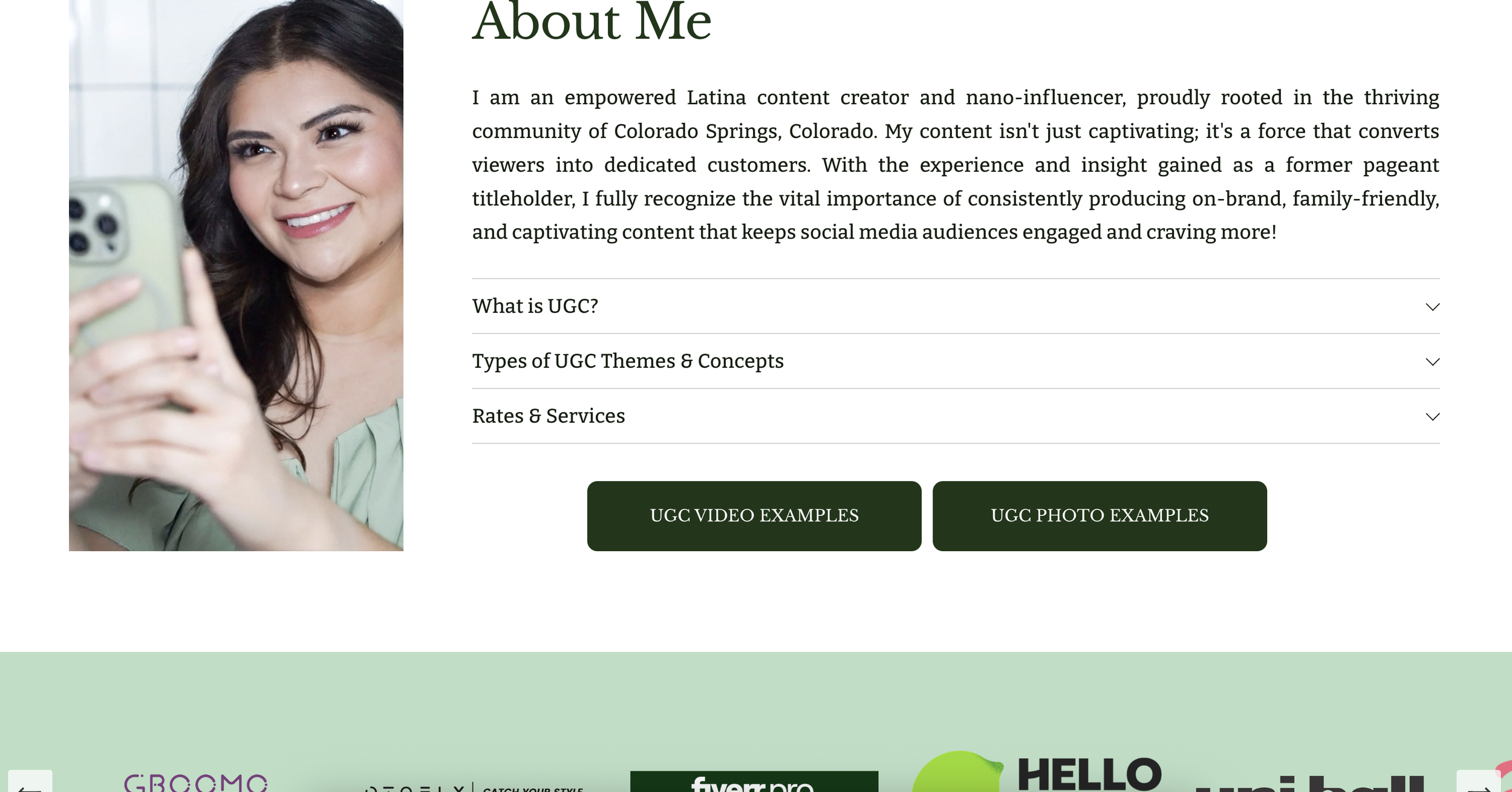
My original portfolio lived on a free Canva website when I first started, and many creators begin there.
Step 4: Start Pitching Brands
One of the most important parts of building a UGC business is pitching.
Many brand partnerships happen because creators reach out first.
Look for brands that already run social media ads or collaborate with creators.
Your pitch should be short and professional. Introduce yourself, explain how you can create content that supports their marketing, and include your portfolio.
Consistency matters here. Pitching regularly increases your chances of landing opportunities.
Want access to some of my pitches that actually landed me jobs? You can purchase and download them here.
Step 5: Join UGC Platforms
While pitching is important, platforms can also help connect you with brands.
Some of the platforms I have used include:
• Bento
• Bambassadors
• Insense
Bento is a pitching service that allows you to pitch directly to brands and provides contact information for hundreds of them. It is free to use, but paid options allow for more access to specific features like their AI assistant that can pitch on your behalf.
The Bambassadors and Insense platforms allow brands to post campaigns and creators can apply directly.
You may also start receiving inbound opportunities as your portfolio grows. This is when brands reach out to you directly with an opportunity.
Step 6: Deliver High Quality Content
Once you land your first collaboration, focus on delivering strong content.
Brands value creators who:
• communicate clearly
• meet deadlines
• follow creative briefs
• provide engaging content
Good relationships often lead to repeat work and long term partnerships. Long term relationships can also lead to retainers, which are monthly payments in exchange for a set amount of content.
How Long Does It Take to Make Money with UGC?
Like any business, results can vary.
Some creators land their first deal quickly while others take time to build a portfolio and pitch consistently.
The most important factors are:
• consistency
• improving your content skills
• building relationships with brands
UGC can become a meaningful income stream over time, especially as your portfolio grows and you gain experience.
Once you start landing UGC deals, it is important to keep track of your income, including gifted or seeding campaigns, because you can be taxed on these. Additionally, read each contract thoroughly. If a brand does not provide you with one, give them one. This helps protect you, maintain your professionalism, and ensure you actually receive payment within a set time frame.
Final Thoughts
Starting a UGC business does not require a massive following or expensive equipment. Many creators begin with just a smartphone, good lighting, and a willingness to learn.
What matters most is your ability to create content that feels authentic and connects with audiences.
If you are curious about building a UGC business, start small. Create sample content, build your portfolio, and begin pitching. Every creator starts somewhere.
And you might be surprised by how quickly opportunities can grow once you take that first step.
As a thank you, here is a link to my free UGC Starter Checklist.